
Reference desk
The autonomous vehicle industry: a reference desk for data and research
An index of the sector's listed companies, the autonomous vehicle research that documents it, and the datasets showing what is actually driving on public roads. The autonomous vehicle industry generates more announcement than delivery; this keeps the record straight, with every source named.
Fig. 1 — proving ground, calibrated lane geometry
Assessment
Automation level in commercial service
Where the industry actually is against the SAE definitions, rather than against its own announcements. Levels 3 and 4 are in service in bounded operating domains; level 5 has never been demonstrated by anyone.
LEVEL 2Hands off
Driver supervises continuously; sold to private buyers at scale.
96
LEVEL 3Eyes off
Conditional automation inside a declared operating domain; type-approved for private sale.
41
LEVEL 4Mind off
Driverless inside a geofence, with the technical supervisor off-vehicle.
28
LEVEL 5Any ODD
No operational design domain restriction. Not demonstrated.
00
Disengagement by sensor modality
Miles between reported disengagements, by the modality the failure was attributed to. Every operator counts a disengagement differently, which is why the year-on-year comparison published elsewhere does not survive contact with the definitions.
CH01 · Lidar ranging
17,300 mi / disengagement
CH02 · Radar velocity
8,140 mi / disengagement
CH03 · Camera classify
2,690 mi / disengagement
CH04 · IMU odometry
none reportable events
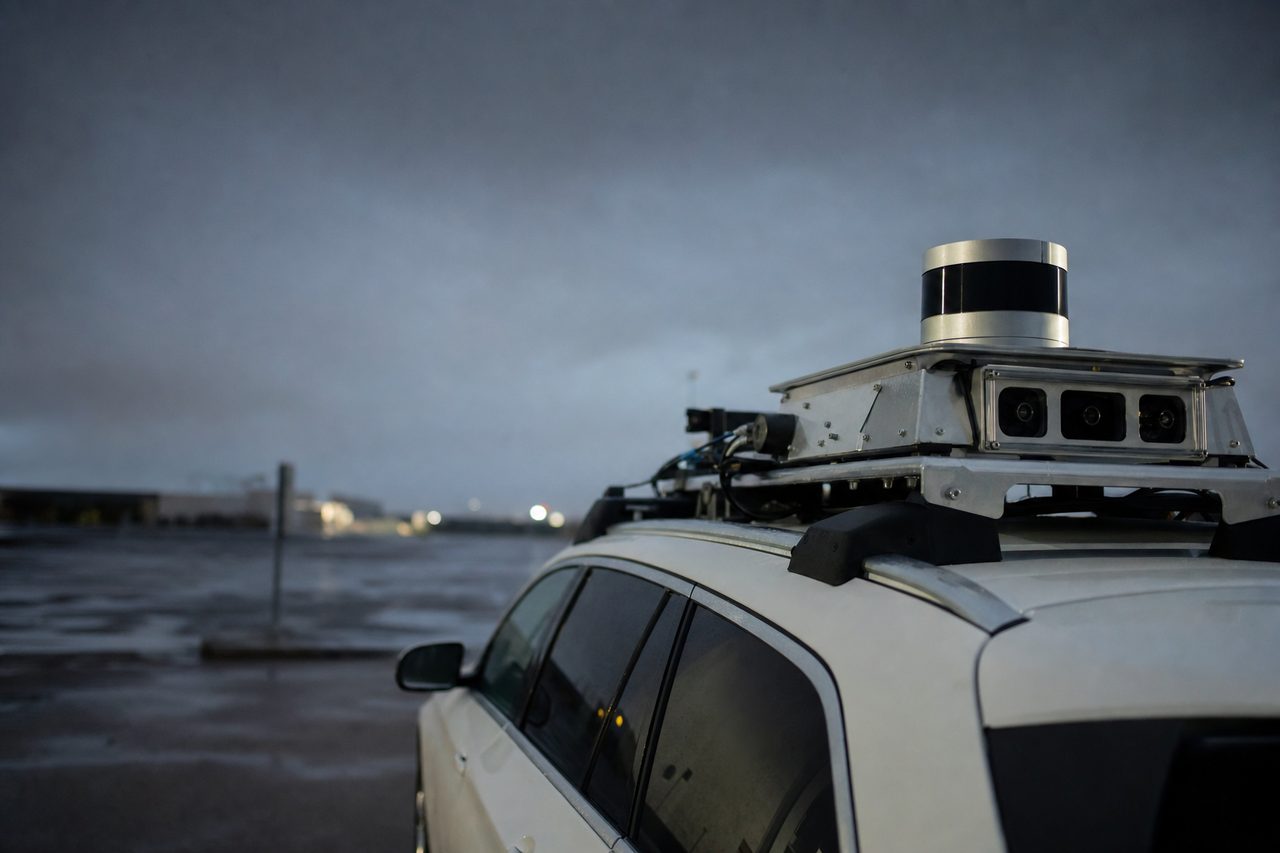
Fig. 2 — sensing hardware under assessment
Lidar, radar, camera, IMU — four channels, four failure modes
- Index constituents
- 19 / 20
- Index launched
- 2014
- Archive from
- 2013
- Reports hosted
- 2
01 · Index
A reference index of driverless car stocks
The D20 was built to answer a question that seemed straightforward in 2014: if automated driving arrives, which listed companies in the autonomous vehicle industry capture the value? Twenty were selected across vehicle manufacturing, tier-one supply, mapping and compute, weighted equally so that no single share price could stand in for the whole thesis.
Ten years later the interesting result is not the return. It is how badly the roster held its shape. One constituent was acquired and came back public five years later under its own ticker. One split in half, with the autonomy business inheriting the slot and the rest sold into a different industry. Two were renamed after corporate reorganisations that never touched a market. A thematic index that cannot process those events quietly stops measuring what it claims to measure — which is why the reconstitution rules are published in full rather than summarised.
The other result is concentration. Equal weighting was chosen specifically to stop one name dominating, and one name dominated anyway. The compute constituent's rise had far more to do with demand from data centres than from vehicles, which is the sort of thing a thematic index is structurally unable to separate out.
-
NVDA
Nvidia
Still listed under the original ticker.
-
MBLY
Mobileye
Acquired by Intel in 2017; returned to public markets in an October 2022 IPO.
-
DLPH → APTV
Delphi Automotive
Split in December 2017. The autonomy business became Aptiv; the powertrain business became Delphi Technologies, acquired by BorgWarner in 2020.
-
TOM2
TomTom
Listed in Amsterdam.
-
BBRY → BB
BlackBerry
Ticker shortened to BB in 2019.
-
GM
General Motors
Still listed. Cruise was acquired in 2016 and folded back into GM in 2024.
02 · Deployment
Deployment data: what is actually driving without a driver
Announcement volume and deployed capability have never tracked each other in the autonomous vehicle industry. The tracker separates the two: which operators carry public passengers with no one in the driver's seat, in which metropolitan areas, and since when. Programmes that were suspended or wound down stay on the list, because the failures are the more instructive half of the record.
- Waymo Phoenix, San Francisco, Los Angeles, Austin 2020
- Baidu Apollo Go Wuhan, Beijing, Chongqing 2022
- Pony.ai Beijing, Guangzhou, Shenzhen 2022
- WeRide Guangzhou, Abu Dhabi 2022
- Zoox Las Vegas, San Francisco Bay Area 2025
03 · Library
The research the autonomous vehicle industry keeps citing
Two papers from the University of Michigan Transportation Research Institute have been cited continuously since 2015 — in academic work, in trade press, and in security research published in eight languages. They remain among the most-referenced autonomous vehicle research in the field, and the report library is where the wider autonomous vehicle research on this subject is indexed. Both are hosted here as the original PDFs at their original paths, because a citation that resolves is worth more than a tidy URL.
- Road Safety With Self-Driving Vehicles — Sivak & Schoettle, January 2015. Why a mixed fleet of automated and conventional vehicles may perform worse than either alone.
- Potential Impact of Self-Driving Vehicles on Household Vehicle Demand — Schoettle & Sivak, February 2015. The trip-sharing arithmetic behind the reduced-car-ownership argument.
04 · Notice
Press Release
Linking News, Best Press Release Distribution Service, Trusted by Thousands of Auto and Transportation Industry Professionals. Companies announcing vehicle programmes, funding rounds or regulatory milestones reach the trade press through a Press Release Distribution Service rather than by contacting outlets individually.
05 · Reference