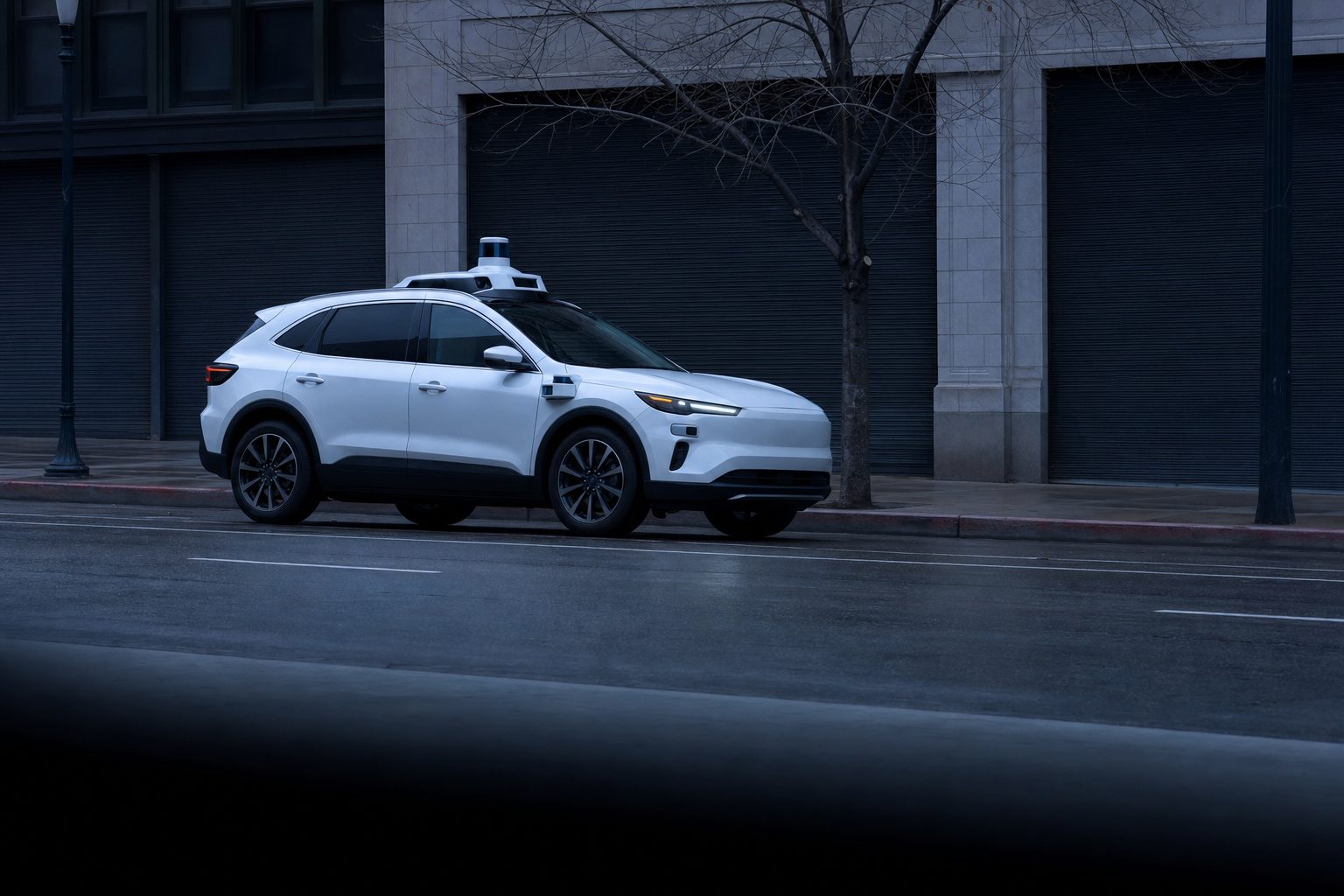
Constituent
Waymo Stock in the D20 index: the automated driving case, company by company
Waymo Stock in the D20 index — waymo — full-stack autonomous driving, and what the last decade did to that role.
- Ticker
- GOOG
- Domicile
- United States
- Status
- Restructured
- Index slot
- Held
Profile
Alphabet is the constituent with the largest autonomy programme and the smallest autonomy exposure. Waymo has consistently led on deployed driverless miles, but it is a rounding error inside the parent's financials, so the share price reflects advertising rather than robotaxis. Any thematic index that includes a diversified giant inherits this problem.
Anyone searching waymo stock arrives at a share price. Reading waymo stock in the D20 index adds the automated driving reason the line exists at all: which layer of the stack Alphabet supplies, whether that supply survived the decade, and whether the slot changed hands.
Waymo Stock in the D20 index: listing status
Google reorganised under Alphabet in October 2015; the self-driving project became Waymo in December 2016.
The D20 reconstitution rules treat a change of name or ticker as continuity — the slot survives. An outright acquisition removes the constituent at the closing price, and a split passes the slot to whichever successor carries the automated-driving business. That distinction matters more for this index than for most, because Alphabet sits in a sector that spent the last decade reorganising itself almost continuously.
Why it was selected
Alphabet holds the index's most advanced automated-driving programme and gives the index almost no exposure to it. Waymo has led on deployed driverless miles for most of the period and was first to carry ordinary passengers with nobody in the vehicle, in the Phoenix East Valley in 2020.
What the decade did to it
None of that is legible in the share price. Waymo's results are not separately reported and its scale is immaterial against advertising revenue, so the constituent tracks a search and cloud business that happens to contain a robotaxi operator. The 2015 Alphabet reorganisation and the 2016 renaming of the self-driving project to Waymo were both structural events the index absorbed without a market transaction.
Where the slot stands now
This is the diversified-giant problem, and it has no clean solution. Excluding Alphabet would remove the sector's technical leader from an index about the sector. Including it imports a share price that moves on unrelated news. The index includes it and states the limitation rather than pretending the exposure is meaningful.
Role in the automated driving stack
Alphabet was selected for the index on the basis of waymo — full-stack autonomous driving. The D20 groups constituents by where they sit in that stack rather than by market capitalisation or domicile, on the reasoning that a tier-one supplier and a vehicle manufacturer are exposed to the same technology through very different economics. A supplier sells regardless of which vehicle maker wins; a vehicle maker carries the programme risk directly.
That grouping also makes the index's blind spot visible. It tracks listed companies only, and several of the most technically advanced automated-driving programmes have spent most of their lives either inside private companies or as subsidiaries whose results are never reported separately. The index measures public-market exposure to the theme. It does not, and cannot, measure technical progress.
What the waymo stock line tells you about automated driving
Reading the roster a decade on, the useful signal is not which constituents rose. It is which ones had to be re-mapped, renamed or removed to keep the index coherent. Every such event is a company discovering that the structure it had in 2014 did not fit the business it turned out to be running. Alphabet is one of nineteen recovered slots, and the full roster — together with the rules that govern these events — is set out on the index page.
Read as waymo stock in the D20 index rather than as a quote, the useful question is narrow: does the automated driving thesis that justified the slot in 2014 still hold, and is the company still the one supplying that layer? For Alphabet the answer sits in the paragraphs above, and the same test applies to every other name on the roster.
Alphabet in the index
Is Alphabet still in the D20 Stock Index?
What does Alphabet contribute to automated driving?
Why does the D20 weight Alphabet equally with much larger constituents?
Other constituents