Consumers Insist on Steering Wheels in Driverless Cars, and Canadians Say Yes to Driverless Tech, Sort Of
Burney Simpson
Two new surveys indicate the public has high demands but mixed feelings about driverless vehicles, though they are aware of some of the challenges that auto manufacturers face as they develop the technology.
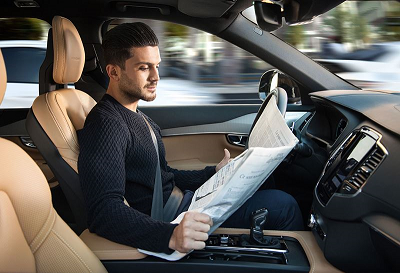
Nine out of 10 consumers demand that autonomous vehicle occupants have the ability to override the vehicle controls at any time, according to a survey of 10,000 consumers worldwide commissioned by Volvo.
At the same time, 81 percent say the auto OEM should be responsible for an accident that occurs when the vehicle is in autonomous driving mode. Further, 90 percent say that an autonomous car should pass a driving test just like a human driver.
“People have told us that they need to feel in control and have the choice of when to delegate driving to the car,” said Volvo’s Anders Tylman-Mikiewicz, in a press release. “Today, that need is ultimately fulfilled with the presence of a steering wheel. … Therefore, a steering wheel is necessary until those needs change.”
A survey of Canadian consumers found mixed feelings there as well.
About 25 percent of Canadians are excited about the cars, about 25 percent are wary, and about half say it depends on the technology, according to a survey from Kanetix.ca, an online insurance comparison shopping site based in Toronto.
Canadian men are twice as likely as women to say they would use a driverless car, and people aged 18-34 are the most enthusiastic about the technology. These advocates say the cars will mean safer roads, more relaxing drives, and easier parking.
And nearly one in five Canadians think driverless cars would be just “plain cool,” Kanetix reports.
Folks in Canada’s two Eastern provinces – Quebec and Ontario – are more excited about driverless than those in the West.
That is fortunate as Ontario on January 1 officially began allowed the testing of driverless vehicles, joining states like California and Michigan. As of last October, the province and partner businesses had promised they would invest about $3 million in the testing.
The Ontario Centres of Excellence Connected Vehicle/Automated Vehicle program is coordinating business and government investments in the activity.

